Sciatica Relief in Lawrenceville
Introductory Overview
Sciatica often presents as radiating pain, numbness, tingling, or sharp discomfort that travels from the lower back through the hip and down the leg—sometimes reaching the foot.
For some people, sciatica is occasional. For others, it becomes persistent, disruptive, and limiting. Sitting, standing, driving, sleeping, or staying active can quickly become difficult.
What Is Sciatica?
Sciatica refers to irritation or compression of the sciatic nerve, the longest nerve in the body. When this nerve is compressed or inflamed, symptoms can extend beyond the lower back and into the buttock, leg, or foot.
Sciatica is not a diagnosis on its own—it’s a symptom, and the underlying cause matters. Determining why the nerve is irritated is essential before choosing the right course of care.
Common Causes of Sciatica
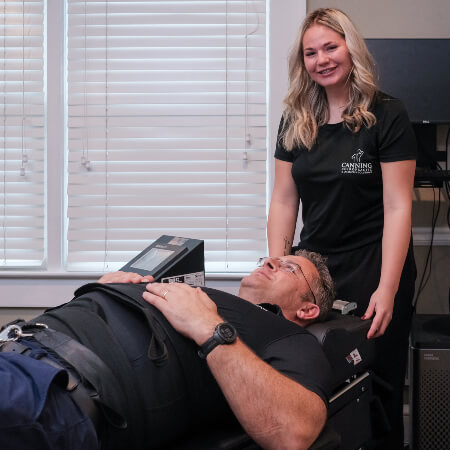
- Herniated or Bulging Discs: Disc injuries are one of the most common causes of sciatica. When a disc presses on the sciatic nerve, pain, numbness, or weakness can result. In appropriate cases, non-surgical spinal decompression may help reduce pressure on the disc and surrounding nerve structures.
- Spinal Compression or Degenerative Changes: As discs lose height or spinal joints become stressed, the space available for nerves can decrease. This compression may contribute to sciatic symptoms, particularly when pain worsens with sitting or certain movements.
- Muscle or Soft Tissue Involvement: In some cases, muscular tension or irritation near the sciatic nerve can contribute to symptoms. Identifying whether the issue is structural, disc-related, or muscular is an important part of determining the most effective approach.
How Sciatica Is Evaluated
- Relieving sciatica starts with understanding what’s causing it.
- Where your pain travels
- When it started
- What makes it better or worse
- How it’s affecting daily life
A thorough clinical exam is then performed to assess spinal function, nerve involvement, and areas of compression. When appropriate, imaging such as X-rays or MRI findings may be reviewed to better understand disc or structural involvement.
From there, we determine whether spinal decompression—or another conservative approach—is appropriate for your specific condition.
When Spinal Decompression May Help Sciatica
Not all sciatica cases are the same, and spinal decompression is not appropriate for everyone.
- Reducing pressure on the affected disc
- Creating space around irritated nerve roots
- Supporting improved disc hydration and healing
If decompression isn’t appropriate, we’ll tell you.
